
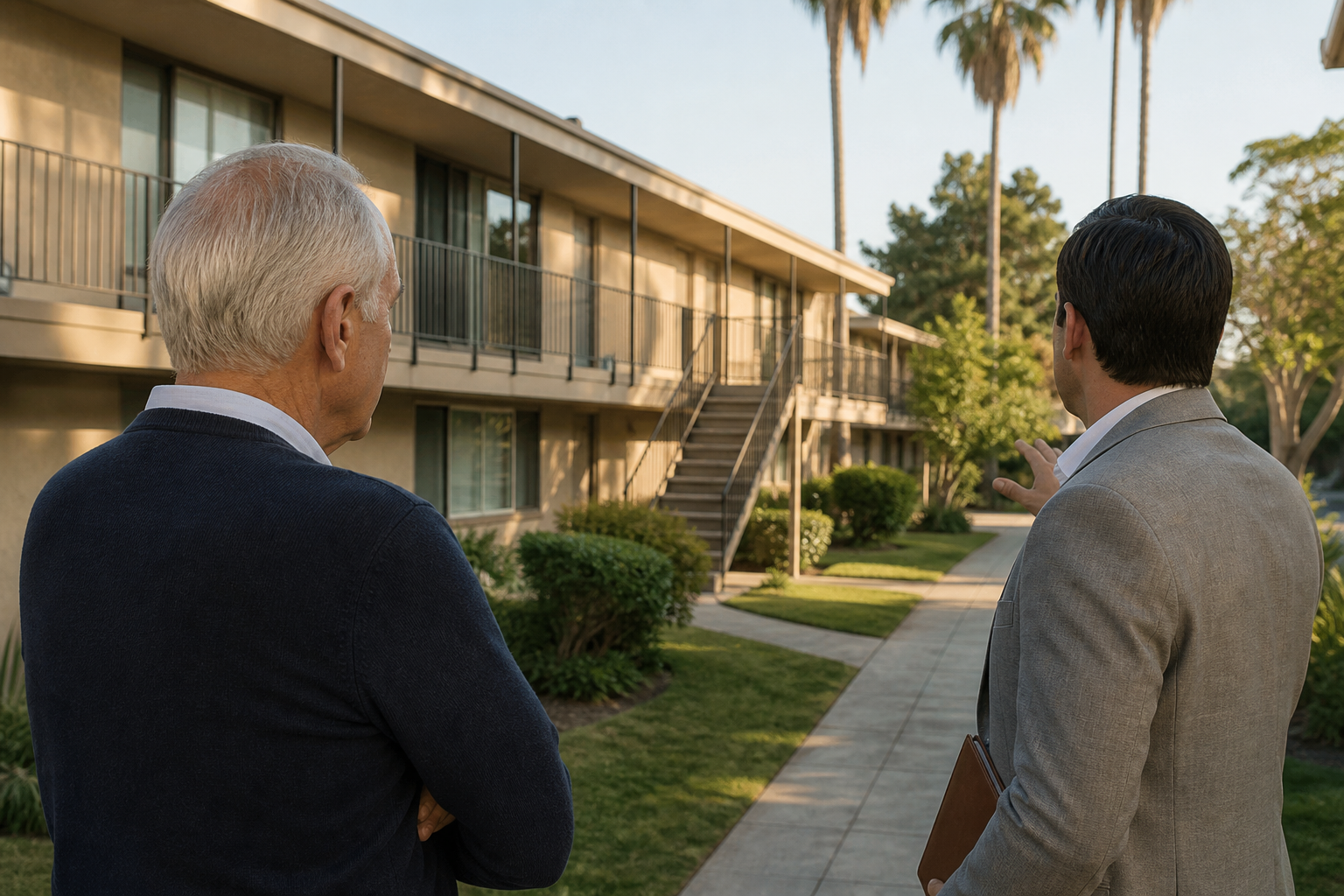
Holding a SoCal apartment building feels like the safest decision. Until the market tells you otherwise.
Long-term holders of Southern California multifamily have been conditioned, rightly, to sit tight. Appreciation has rewarded patience for decades. But the conditions that made indefinite holding the obvious strategy have shifted. In 2026, several market signals are prompting owners. Particularly those with 5-50 unit buildings. To take the sale question seriously for the first time.
Cap Rate Expansion Changed the Equation
A 2026 SoCal multifamily market analysis from The Apartment Dealer documented a dynamic that surprised many long-term owners: cap rates expanded by roughly 20% from prior cycle peaks across Southern California. The result: even properties generating higher rental income than five years ago are valued below their peak on a per-dollar-of-income basis.
For owners who have been raising rents and assuming their building value has risen proportionally, the math does not work that way. Value moves with cap rates, not just with income. If you have not had a current market valuation in the past 12-18 months, you may be operating on assumptions that no longer reflect reality.
The Equity Harvest Question
Many SoCal apartment owners are sitting on significant unrealized gains accumulated over 10-30 years of ownership. The question is not whether the gain exists. It clearly does. The question is whether holding the asset is the best use of that equity going forward.
Consider: if your building is generating a 3.5% return on current market value but your equity could be redeployed into a passive investment generating 7-8%, the opportunity cost of holding becomes quantifiable. Equity return is not the same as total return on current value. And conflating the two is the most common error long-term holders make when evaluating whether to sell.
Operational Signals That Suggest a Sale Makes Sense
Deferred maintenance is compounding. A roof, plumbing, electrical, or HVAC system approaching end of life represents both capital expenditure risk and a valuation discount buyers will apply. Selling before a major capital event. Rather than after. Preserves proceeds.
Management burden is growing. Tenant turnover cycles, LA County rent regulations, and increasing compliance requirements have made self-management more complex at every unit count. If the building is taking more of your time and energy than it did five years ago, that is worth pricing into your hold decision.
Your tax situation has changed. Retirement planning, estate planning, or a change in income level can shift the optimal timing for a sale. A 1031 exchange into a passive structure may eliminate the management burden while deferring the gain. But that option requires advance planning.
The Off-Market Advantage for SoCal Sellers
Listing publicly is not always the right move for 5-50 unit SoCal multifamily. Public listings attract buyers who rely on MLS data and broker marketing. Often resulting in a competitive process that takes 60-90 days, generates tenant disruption, and surfaces buyers who are not capitalized for your asset.
Off-market sales reach the buyers most likely to close at full value: local operators, 1031 exchange buyers, and investors actively seeking your specific asset type in your submarket. VisionWise Capital facilitates these conversations directly.
Understanding Your Position Before You Decide
VisionWise Capital works with SoCal apartment owners to understand exactly where they stand: current market value, tax implications, 1031 exchange options, and what a passive reinvestment of proceeds could generate. You do not have to decide to sell to have this conversation.
Ready to learn more? Schedule a Confidential Owner Consultation →
This content is for informational purposes only and does not constitute investment, legal, or tax advice. Real estate transactions and private placements involve significant risk, including potential loss of principal. Always consult qualified legal, financial, and tax professionals before making investment decisions.
FAQs
What should readers verify before making a decision?
Verify current property, financial, legal, tax, financing, insurance, operating, and market information with qualified professionals.
Are projected investment results guaranteed?
No. Projections are based on assumptions, and actual income, expenses, values, financing terms, timing, and returns may differ.
Why is due diligence important?
Due diligence helps identify missing information, test assumptions, clarify responsibilities, and evaluate risks before a binding decision.
Which professionals may be needed?
Depending on the situation, consult qualified legal, tax, financial, lending, insurance, inspection, valuation, and property-management professionals.
Can market conditions change the outcome?
Yes. Interest rates, rents, occupancy, expenses, regulations, insurance, capital needs, and buyer or investor demand can change.
Is this article legal, tax, financial, or investment advice?
No. The article is provided for general educational purposes and does not replace advice based on individual circumstances.
For the tax rules referenced above, see IRS guidance on like-kind (1031) exchanges.
Related Reading
- Multifamily Capital-Expenditure Due Diligence
- General Solicitation vs. Investment Eligibility
- Real Estate Passive Income for Accredited Investors: The 2026 Playbook