
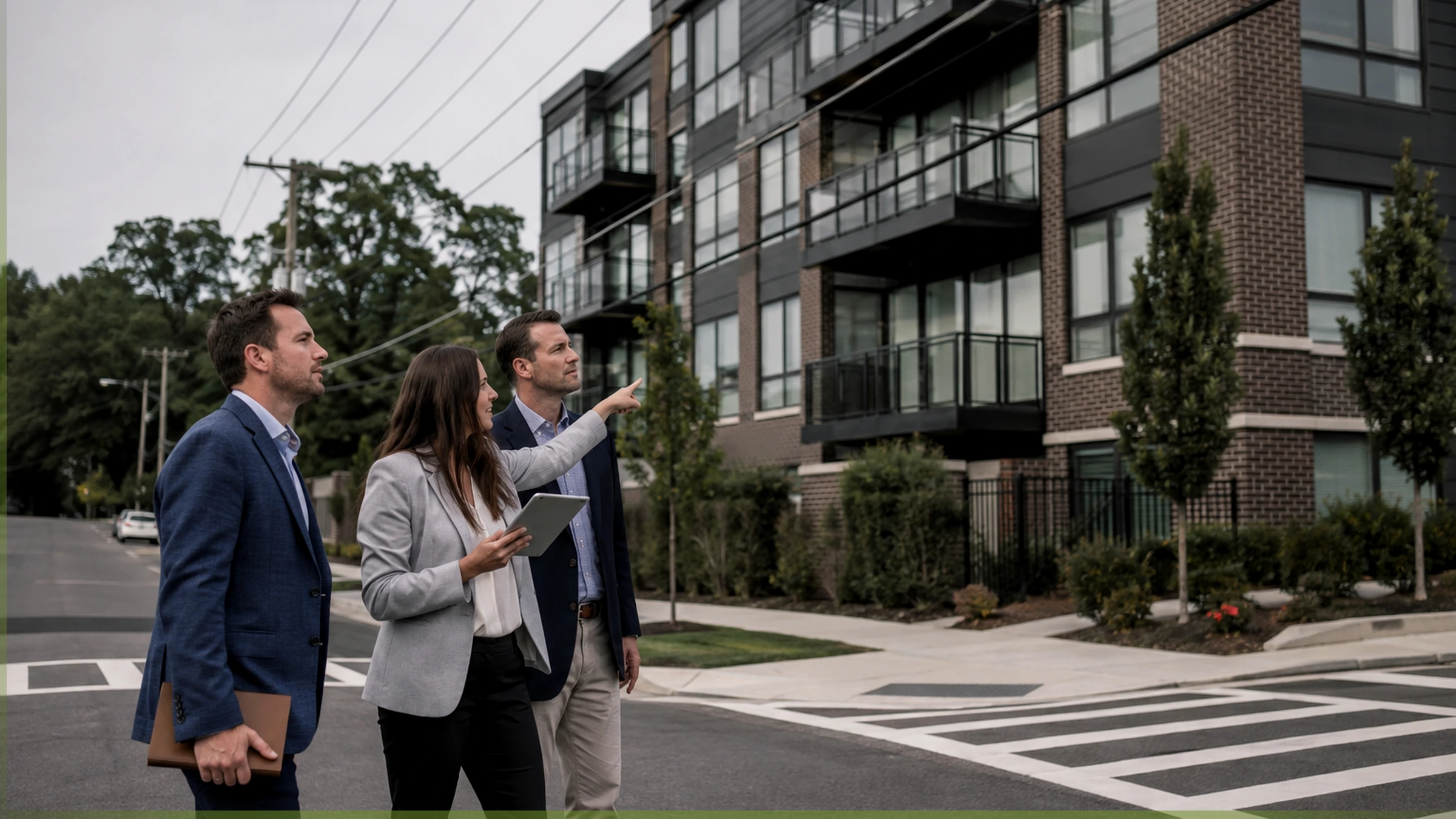
The bid landed at 4:40 on a Thursday — a clean total, a short exclusions list, a 90-day timeline. Everyone in the room wanted to like it. Then someone read the exclusions list out loud instead of past it: “asbestos abatement, if required, billed separately.” On a building built in 1974, that’s not a footnote. That’s a question nobody had answered yet.
The companion piece on this site, Orange County Multifamily Investment: When a Renovation Budget Is Too Optimistic, walks through the mechanics of why renovation budgets break. This is what it looks like when the mechanics stop being theoretical and show up in a conference room.
The Decision Tension: Sign Now, or Ask First?
The timeline pressure was real. The seller had another offer circling, and a 90-day renovation timeline is a selling point if it holds. Signing the contractor bid as written would have let the deal move that week. Instead, we asked for an abatement survey before we’d rely on the number — a two-week delay with no guarantee the deal would still be there at the end of it.
A clean bid and a complete bid are not the same thing. One tells you a number. The other tells you what the number is missing.
The Evidence: What the Survey Actually Found
The abatement survey came back with asbestos-containing material in roughly 30% of the unit interiors — textured ceiling finish and vinyl floor tile, common in buildings from that era and typically manageable, but not a cost anyone had priced. Added to the bid: abatement, re-inspection, and a two-week schedule extension. Not a deal-killer. A real number that the first bid simply didn’t contain.
The Consequence: What a Two-Week Delay Actually Costs
Two weeks of delay on a renovation-heavy deal shows up in three places: carrying costs on undeployed capital, a compressed lease-up window before the next rent cycle, and a contingency reserve that now has less room than it did the week before. None of those sink a deal on their own. Stacked without a buffer, they can turn a disciplined underwrite into a strained one.
How VisionWise Capital Applies the Lesson
This is the process behind the VisionWise Way: review the property, the financing, the operations, and investor fit together, in that order, before conviction gets ahead of evidence. On this deal, that meant pricing the abatement, widening the contingency line, and re-testing whether the return still held at the slower timeline — before anyone signed anything.
We also assign ownership before we move on: one person tracks down the missing survey, another checks the revised number against the operating history, and the investor takes their open questions to their own advisor before deciding whether the deal still fits. That separation is what keeps a clean exclusions list from standing in for an answered question.
The Downside We Didn’t Get to Skip
The deal still closed — at a wider contingency reserve and a slightly lower projected return than the original bid implied. That’s the honest accounting of asking the extra question: sometimes the answer costs you two weeks and a few points of projected return. The alternative — finding the asbestos after the contractor was already on-site — costs more, and costs it without warning.
Investor Questions Worth Carrying Forward
- What’s on the exclusions list, and who’s pricing it?
- What does a two-week delay actually cost this specific deal?
- Which assumption has the weakest evidence behind it?
- Who owns the next answer, and on what timeline?
- How much liquidity remains outside the investment if the schedule moves?
I wrote more on what that evidence should include in the related piece on reading an inspection note before you commit.
Investor Takeaway
The useful result here was never a cleaner bid. It was a bid that told the truth once someone asked it the right question — what’s missing, what’s the cost of finding out, and what’s the cost of not asking. That’s what discipline looks like applied to capital: a defined process, a written boundary, and enough patience to let the number change before the contract does.
If you want to see how we test a renovation budget before it reaches our investment committee, talk to VisionWise Capital.
For a broader primer on investing fundamentals, see investor.gov.
Important information
Past performance is no guarantee of future results. All investments involve risk and may result in loss. This material is for informational purposes only and does not constitute an offer to sell securities or a solicitation of an offer to buy securities. Accredited investors should review governing documents and consult their own legal, tax, and financial advisors.