
Eight rentable storage compartments fit neatly on the renovation drawing. A utility easement runs through the same space. Should an investor still count the projected income? Only after the recorded rights, site conditions and qualified review support that use. In this hypothetical acquisition, an unresolved permission question must change the base plan before it becomes a construction commitment.
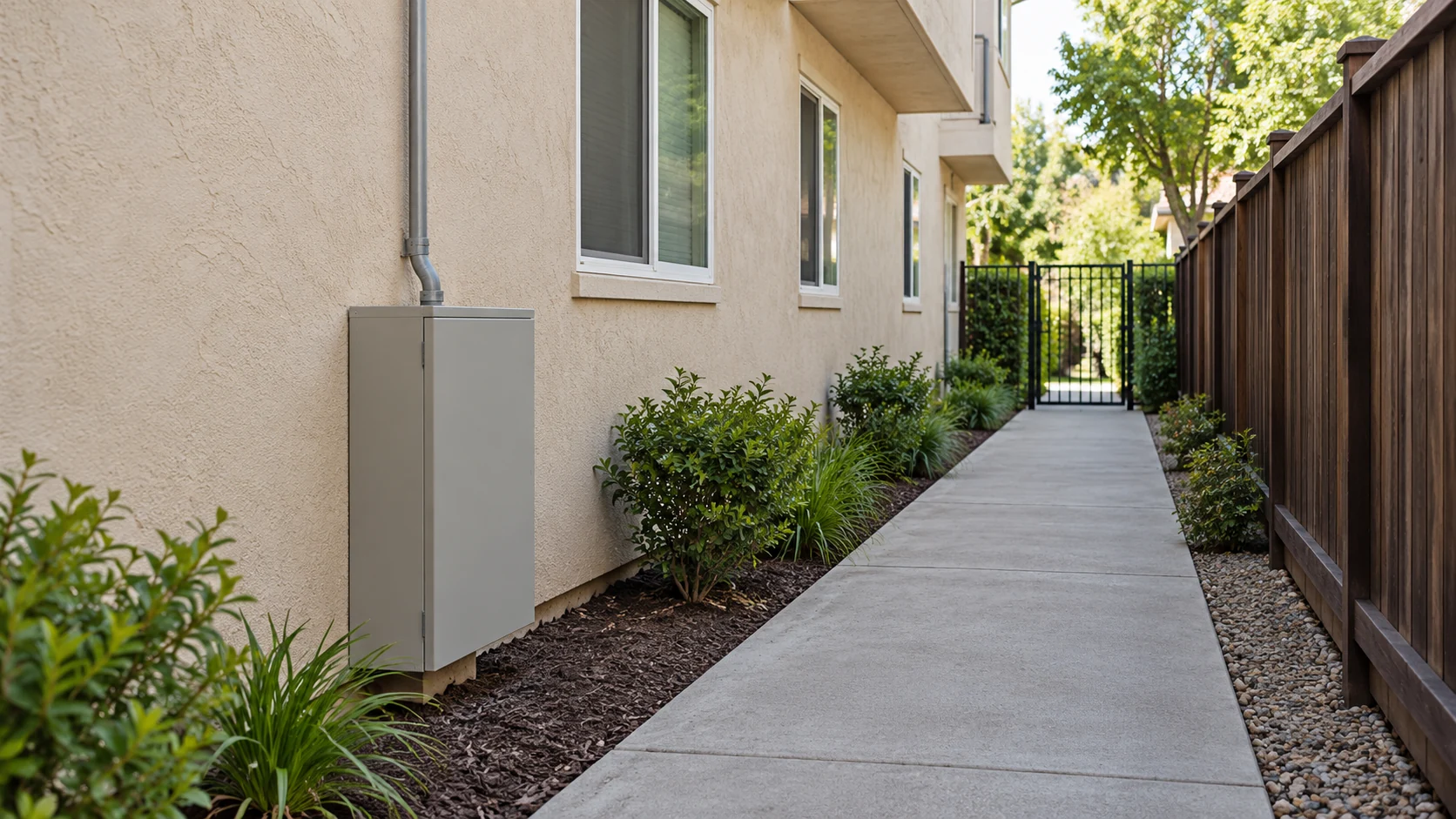
For an accredited investor evaluating Southern California apartments, the conflict is practical: the planned storage has a location and a projected rent, but not yet an established right to exist there. An easement can serve an essential utility and still constrain an improvement. The work is to understand that interaction, rather than accept or reject the exception by its label.
The preliminary report is the starting point, not the conclusion
A preliminary title report describes the proposed basis for issuing title insurance, including listed exceptions and requirements. It is not the issued policy, a complete account of physical conditions or a legal opinion that the intended use is permissible. A report with familiar-looking exceptions can still raise a consequential question about access or construction.
The California Department of Insurance’s title insurance guide explains that policy terms determine covered and excluded risks. It also distinguishes standard and extended coverage, notes that extended coverage typically requires a survey, and describes optional endorsements. This consumer guide provides general background; it does not establish the coverage available for a particular multifamily acquisition.
Keep three conclusions separate: what rights the recorded instruments describe, what a survey and site review establish, and what the insurer agrees to cover. None substitutes for the others. The broader multifamily acquisition diligence checklist places title among the other reviews; here, the question is whether the evidence supports a particular property-use assumption.
Turn each material exception into a document request
The storage sketch cannot resolve the utility’s rights. Request the complete recorded instrument, exhibits, referenced maps and amendments behind the report’s exception. A document number identifies where the review begins; the actual language and mapped area determine which questions counsel and the surveyor must answer.
For each easement that could affect the business plan, ask counsel and the acquisition team to address:
- Which land receives the benefit, which land carries the burden, and does the acquisition include the relevant rights?
- What activities are permitted: passage, utility service, inspection, repair or something narrower?
- Where is the affected area, and can its description be located reliably on a survey?
- Who must maintain the area, restore damage or pay expenses, and how are disagreements handled?
- What provisions address duration, termination, relocation, gates, obstructions or additional users?
A right benefiting the apartment parcel may be as important as a restriction over it. If operations depend on crossing neighboring land, ask counsel to identify the documentary basis for that use and whether it benefits the interest being acquired. Do not infer the answer from the seller’s description of longstanding practice.
Also distinguish an easement from a license or informal permission. These arrangements can have different consequences for transfer and continued use. The investor’s role is to identify the dependency and request a qualified explanation, not to resolve legal enforceability from a document heading.
Ask whether access works for the actual operation
The existence of an entrance does not answer every access question. Separate the legal right to use a route from its physical suitability and any applicable public-agency requirements. A route that accommodates residents on foot may not answer questions about maintenance vehicles, waste collection or emergency access.
Trace each essential route from the property to the public street. Where it crosses another parcel, changes width or passes through a gate, request supporting evidence. Ask whether the street’s status and the connection to it have been confirmed, rather than assuming that a paved surface establishes public access.
Useful review questions include:
- Does the documented route match the route residents and service providers actually use?
- Are gates, walls, landscaping or equipment within the described access area?
- Does the proposed renovation depend on access beyond what currently exists?
- Who can address an obstruction, and what practical disruption could occur while a dispute is resolved?
Access coverage in a title policy should not be treated as confirmation that every operational need is satisfied. Ask the insurer what the proposed language addresses, counsel what rights exist, and the appropriate design professionals or agencies what the intended use requires. Those answers may concern different aspects of the same route.
Put the storage sketch over the recorded rights
A recorded description can be difficult to evaluate without seeing it against buildings, fences and planned work. Ask the surveyor to relate material recorded easements to current improvements and identify anything that cannot be plotted from the available description. An unplottable exception is an unresolved location question, not evidence that no conflict exists.
Agree on survey scope with the surveyor, counsel and title insurer. An old survey or a seller’s site sketch may provide context without answering current questions. A survey also does not, by itself, establish zoning compliance or interpret every obligation in an agreement.
Now overlay the eight proposed compartments on the surveyed conditions. If their footprint intersects the utility area, stop treating the drawing as a buildable plan. Counsel should address the instrument, and the relevant professionals should address other requirements. Existing structures nearby do not establish permission for these new ones.
The acquisition diligence scheduling guide is useful for coordinating these dependencies. The important sequencing point is that document retrieval, survey work and coverage discussions need enough time to inform the acquisition decision, rather than merely document it afterward.
The revenue that depends on permission
Consider a hypothetical apartment acquisition whose proposed improvements include eight rentable storage compartments along a rear boundary. The projection assumes $60 per compartment each month, or $5,760 annually at full occupancy and collection: eight multiplied by $60 multiplied by twelve. This is assumed gross revenue, not net operating income or a market rent claim.
The preliminary report lists a utility easement. The recorded exhibit and survey place the proposed storage area within its boundaries. Counsel identifies language requiring access for maintenance and restricting structures, while the utility’s response to a proposed alternative remains outstanding.
The investor now has a defined decision. The acquisition team can test an alternative location, seek an acceptable documented resolution, or remove the storage revenue and related construction cost from the base case. It should separately account for redesign expenses and delay. Treating the revenue as secure because an accommodation seems likely would leave the original assumption unverified.
The assumed $5,760 of gross annual storage revenue may be small beside apartment rent, but removing it can expose whether the plan was relying on an unverified accommodation. Keep redesign and delay costs visible as well. An insurance discussion about a specified exposure does not itself give the owner permission to build.
Resolve the exception and the coverage question separately
For each material item, request a written disposition: accepted with understood consequences, addressed through documentation, reflected in a revised plan, or still unresolved. If a release, amendment or consent is proposed, have counsel confirm the necessary parties, form and completion steps. A promise to obtain it is not the completed instrument.
Separately, request the insurer’s proposed treatment. Will the exception remain? Is any narrower wording or endorsement available? What evidence and conditions are required? The final policy and endorsements, rather than a general assurance about insurability, establish the issued coverage.
The CDI guide also distinguishes an owner’s policy from a lender’s policy: the latter protects the lender’s interest, not the buyer’s ownership interest. In a private offering, ask who the proposed named insured is and how that relates to the property-owning entity. Do not assume an individual investor is personally insured simply because the acquisition includes title insurance.
What should remain in the investor’s decision file?
The decision file for the storage proposal should end with a location, a supported right or explicit restriction, a revised economic case and any unresolved consent. That is a more useful conclusion than saying title was reviewed. If a different storage location is proposed, test it on its own evidence instead of transferring the old assumption to a new drawing.
Red flags include unavailable exhibits, an essential route supported only by informal permission, proposed work over an easement that has not been located, and an endorsement discussed without proposed wording or conditions. Another is a business plan that remains unchanged after a material restriction emerges.
If an unresolved issue affects projected income, costs or timing, compare its treatment with the investment terms and risk disclosures in the offering documents. The decision may be to accept a defined limitation, revise the economics, require a documented resolution or decline. A price reduction does not itself create a missing property right.
Property-specific conclusions should come from California real estate counsel, a licensed surveyor, the title insurer and relevant land-use professionals, each addressing their own scope.
Have an easement or access question you want to include in an investment discussion with VisionWise Capital? Schedule a consultation.
Important information
Past performance is no guarantee of future results. All investments involve risk and may result in loss. This material is for informational purposes only and does not constitute an offer to sell securities or a solicitation of an offer to buy securities.