

Multifamily Due-Diligence Checklist for Accredited Investors
A five-phase multifamily due-diligence checklist for accredited investors: before the offer, income, building, money, and paperwork, with the reason behind every line.
A five-phase multifamily due-diligence checklist for accredited investors: before the offer, income, building, money, and paperwork, with the reason behind every line.
Selling an apartment building directly involves pricing the asset, qualifying buyers, organizing financial and lease records, and coordinating legal, tax, title, and escrow support. The article outlines confidentiality considerations and transaction stages.

Family-office interest in multifamily is examined through Southern California housing constraints, changing valuations, patient capital, and rental-income exposure. The article also discusses how accredited investors may access the asset class through private placements.
Southern California apartment owners weighing a sale can examine cap-rate changes, equity use, deferred maintenance, management demands, and tax planning. The article also considers off-market transactions and the value of obtaining a current valuation.

A preferred return sets distribution priority in a syndication and does not guarantee payment. This guide explains cumulative versus non-cumulative returns, waterfall splits, catch-up clauses, and questions about cash flow and calculation basis.
Southern California apartment valuation starts with net operating income and a comparable market cap rate. The article examines submarket differences, rent-control exposure, vacancy assumptions, expense accuracy, and why rising income can accompany falling values.

A 1031 exchange may use a qualifying DST or TIC structure, subject to eligibility and strict timing. The article reviews identification and closing deadlines, sponsor track records, asset quality, debt terms, and hold periods.
Southern California apartment values in 2026 reflect interest rates, normalized rent growth, new supply, operating performance, and investor demand. Owners can update valuations by testing current NOI and relevant submarket evidence.
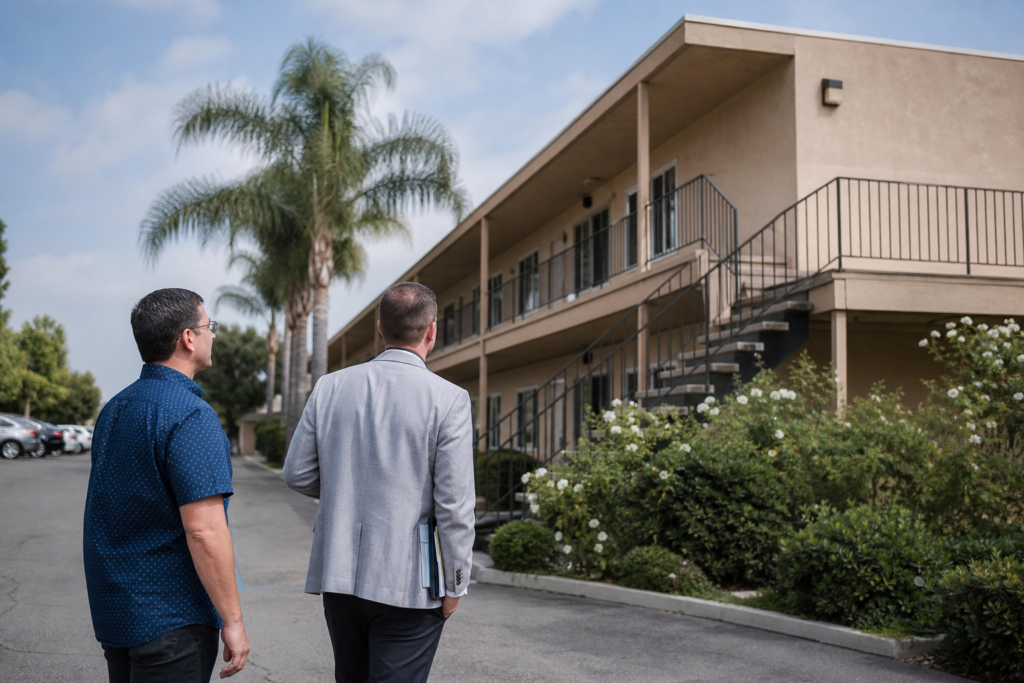
Owners considering a Southern California apartment sale can compare brokered and direct routes by modeling commissions, marketing, tenant access, timing, legal work, and the buyer pool available for the property.

A two-part checklist for advertised private placements: Part A checks the offering is run properly, Part B checks whether the deal is worth your capital.