

How to Evaluate Real Estate Exit Assumptions Without Forecasting Certainty
How to test real estate exit assumptions: exit cap rate sensitivity, rent growth checks, downside cases, loan maturities, and the role of leverage.
How to test real estate exit assumptions: exit cap rate sensitivity, rent growth checks, downside cases, loan maturities, and the role of leverage.

A practical way to compare private real estate sponsor fees: map them by stage, check the calculation base, convert to dollars, and model profit splits.

A rent roll should be checked against bank deposits, signed leases, tenant estoppels, and lease expirations. This review explains a practical reconciliation sequence for finding collection gaps and documenting questions before closing.

A 30-day property review works best when inspections, environmental work, title, surveys, insurance, document requests, income checks, and tenant estoppels are sequenced early. This timeline also identifies common scheduling failures.

Eight-unit apartment acquisitions combine professional management costs with income-based valuation. The article walks through a sample expense model and highlights deferred maintenance, rent-control assumptions, utility billing, financing, and off-market sourcing in Southern California.
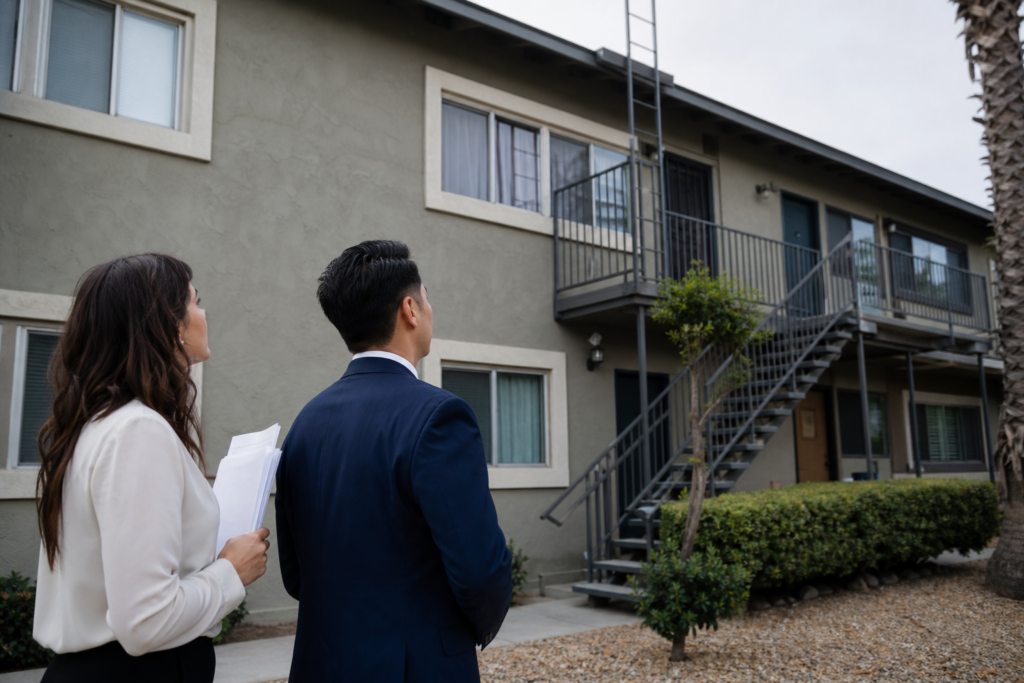
Selling an apartment building directly involves pricing the asset, qualifying buyers, organizing financial and lease records, and coordinating legal, tax, title, and escrow support. The article outlines confidentiality considerations and transaction stages.

A five-phase multifamily due-diligence checklist for accredited investors: before the offer, income, building, money, and paperwork, with the reason behind every line.

A 1031 exchange may use a qualifying DST or TIC structure, subject to eligibility and strict timing. The article reviews identification and closing deadlines, sponsor track records, asset quality, debt terms, and hold periods.

Owners considering a Southern California apartment sale can compare brokered and direct routes by modeling commissions, marketing, tenant access, timing, legal work, and the buyer pool available for the property.

A two-part checklist for advertised private placements: Part A checks the offering is run properly, Part B checks whether the deal is worth your capital.