
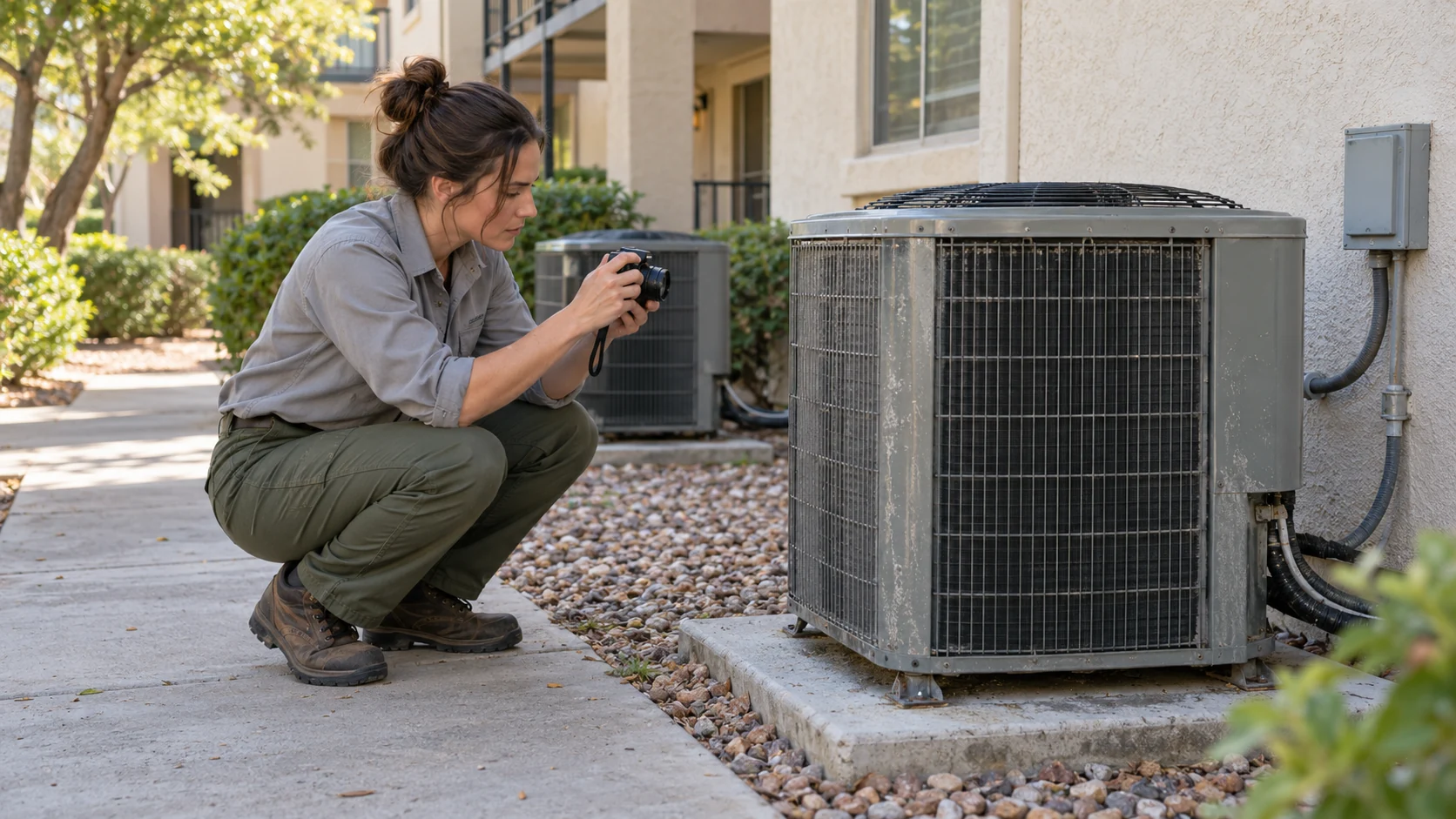
A multifamily capital-expenditure plan should connect each major building component to inspection evidence, a replacement timetable, and available cash. For accredited investors, the question is whether reserves can absorb earlier or more expensive work without relying on an optimistic distribution forecast. A single annual allowance cannot answer that question by itself.
A capex reserve that isn’t tied to a specific component’s remaining life isn’t a plan. It’s a guess with a dollar sign on it.
Key takeaways
- Capital expenditures compete directly with distributions and reserves — a capex plan that ignores this trade-off is incomplete by design.
- Published equipment-life references provide context, but maintenance history, installation quality, environment, and an inspection determine whether a range is useful for this building.
- A property condition assessment performed to the ASTM E2018 standard is the evidence a capex plan should trace back to, not a summary slide.
- Timing risk, not just cost risk, is what breaks a capex plan — a cost that’s priced correctly but arrives three years early still draws down reserves faster than planned.
Review the schedule for roofs, plumbing, HVAC, life-safety systems, parking, and common areas as separate line items, then test whether the plan stays credible if the timing or the cost moves against it.
What Should a Multifamily Capital-Expenditure Plan Actually Contain?
A credible plan lists each major system, its installation date or last replacement, its estimated remaining life, and the evidence behind the cost allowance. Heating, ventilation, and air-conditioning (HVAC) equipment should be identifiable by location and type. A roof estimate should distinguish the covering from drainage, flashing, and any concealed damage. Generic service-life tables are starting points, not promises that a particular component will survive until a convenient budget year.
Quick definition: what is a Property Condition Assessment (PCA)?
A PCA, typically performed to the ASTM E2018 standard, is a structured inspection of a building’s major systems that documents current condition, remaining useful life, and estimated repair or replacement costs. It’s the evidence layer a capex plan should be built from — not a substitute for one, the source of one.
How Do I Compare the Capex Estimate Against What the Building Actually Shows?
| Capex line | Spreadsheet-only estimate | PCA-evidenced estimate |
|---|---|---|
| Roof | Flat annual reserve % | Specific remaining-life estimate by roof type and age |
| HVAC | Replace “eventually” | Unit-by-unit age, condition, maintenance history, and specialist advice |
| Life-safety systems | Assumed current | Verified against inspection and fire-marshal records |
| Common areas | Cosmetic allowance | Itemized against deferred-maintenance findings |
For illustration, consider a Southern California property with fewer than 50 apartments and acquisition leverage below 50% loan-to-value. The initial plan places roof replacement in year eight, but an independent assessment recommends earlier investigation of worn sections. Moving that work forward reduces cash available for distributions even if the estimated construction cost stays unchanged. These are hypothetical assumptions, not a completed acquisition or an observed investment result. The exercise is to reconcile the inspection date with the cash schedule before relying on either.
Quick definition: what is deferred maintenance?
Deferred maintenance is repair or replacement work that was postponed past its recommended timing, usually to preserve near-term cash flow. It doesn’t disappear from the capital plan — it accumulates, often at a higher cost than if it had been addressed on schedule.
How Does VisionWise Capital Underwrite the Capex Line?
I start with the PCA, not the sponsor’s summary of it. I compare the trailing capital spend against what the assessment says should have happened by now, and I want to know which systems are original to the building versus already replaced. If a line item in the plan doesn’t trace to a specific system, age, and inspection finding, I treat it as an estimate, not a fact, until it does.
The sharpest questions are specific: which systems are within five years of the end of their documented service life? What happens to distributions if two of them need replacement in the same year instead of spread across the hold period? How much of the reserve is already allocated to known deferred maintenance versus genuinely held for the unexpected?
How Do I Reconcile a Reserve Schedule With Actual Cash?
Begin with the opening cash balance and distinguish unrestricted cash from lender-controlled reserves. Add planned operating contributions, subtract committed work, and show the balance after each major project. A balance reported at year-end can conceal a shortfall earlier in the year. For work expected before a seasonal leasing period, the month of payment may matter more than the annual total.
Ask whether the same dollar appears in more than one explanation. Cash described as protection against an insurance deductible cannot simultaneously pay an already-approved roof contract. Separate planned replacements, construction contingency, operating liquidity, and any lender-required minimum. The categories may share a bank account, but the model must show which commitments compete for that money.
Then test a specific adverse sequence. In a hypothetical example, a plumbing repair arrives before a scheduled roof project and insurance does not reimburse the loss. Ask which work must proceed for safety, which work can legally wait, and what happens to distributions. If the answer includes additional investor capital, review the authority, notice period, and consequences in the governing documents. Do not assume a lender will release restricted reserves on demand.
What Belongs in a Contractor’s Cost Comparison?
Compare written scopes before comparing totals. One proposal may include permits, access equipment, disposal, and restoration while another excludes them. Check the assumptions about occupied units, working hours, temporary protection, and resident access. A low bid with a broad exclusion for concealed conditions is not directly comparable with a more complete scope.
Record the quote date and how long pricing remains valid. Distinguish a planning estimate from a signed contract, and identify allowances that can change after investigation. The ASTM E2018 baseline assessment guide describes a scope of inquiry; it is not a warranty, a destructive investigation of every assembly, or a guarantee of construction pricing. Specialist work may be needed before a material uncertainty can be priced.
Where VisionWise Capital Fits
This is the capex discipline behind the VisionWise Way: documented building condition driving the plan, not a generic lifecycle table. The capex plan is one of the clearest places that discipline shows up, because it’s one of the easiest line items to understate without anyone noticing until the bill arrives.
We also want to know how capex variance gets reported after closing — which systems were re-inspected, what changed from the original PCA, and who flags it when a reserve estimate needs revising. That reporting cadence matters as much as the original plan.
What Risks Does Even a Well-Documented Capex Plan Still Carry?
Private real estate carries market, property, financing, operating, sponsor, regulatory, tax, and liquidity risk — a detailed capex schedule reduces timing risk, it doesn’t eliminate it. Material and labor costs can move after the plan is set. Two systems can fail closer together than any PCA predicted. Conservative underwriting narrows the range of bad outcomes; it doesn’t close it.
What Should I Ask Before Relying on a Capex Plan?
- Does each major line item trace to a specific system, age, and inspection finding?
- What happens to the reserve if two systems need work in the same year?
- How much of the “reserve” is already committed to known deferred maintenance?
- Who re-inspects and revises the plan after closing, and on what schedule?
- Which legal, tax, or financial professional should review the governing documents?
If you want to walk through how we underwrite a capex plan on an actual Southern California deal, schedule a conversation with VisionWise Capital.
Frequently Asked Questions
Roof life depends on material, installation, exposure, repairs, and maintenance. Ask a qualified roofing professional to explain the remaining-life estimate for this roof. A general industry range cannot establish the condition of an individual building.
A capex reserve provides cash for planned replacement cycles — roofs, HVAC, major systems. A contingency reserve covers unplanned costs the scope didn’t anticipate. Combining them without allocating the cash can overstate what remains available for surprises.
A PCA, often performed to the ASTM E2018 standard, is a structured inspection documenting a building’s system conditions and remaining useful life. It’s the evidence a credible capex plan is built from, rather than a generic reserve percentage.
Yes. Deferred maintenance accumulates rather than disappearing, and it often costs more to address later than it would have on its original schedule. A capex plan that doesn’t account for existing deferred maintenance is understating the real cost of ownership.
The SEC’s investor education materials provide a broader basis for assessing investment risk alongside a property-specific capital plan.
Important information
Past performance is no guarantee of future results. All investments involve risk and may result in loss. This material is for informational purposes only and does not constitute an offer to sell securities or a solicitation of an offer to buy securities. Accredited investors should review the governing documents and reserve obligations with their own financial, legal, and tax professionals before relying on a capital plan.
This capex review is written for accredited investors assessing private offerings; review VWC’s investor eligibility information before requesting offering materials.
Sources: ASTM E2018-24, Standard Guide for Property Condition Assessments. Building-specific ages, costs, and useful-life estimates require the actual inspection records and contractor scopes; the examples here are illustrative.